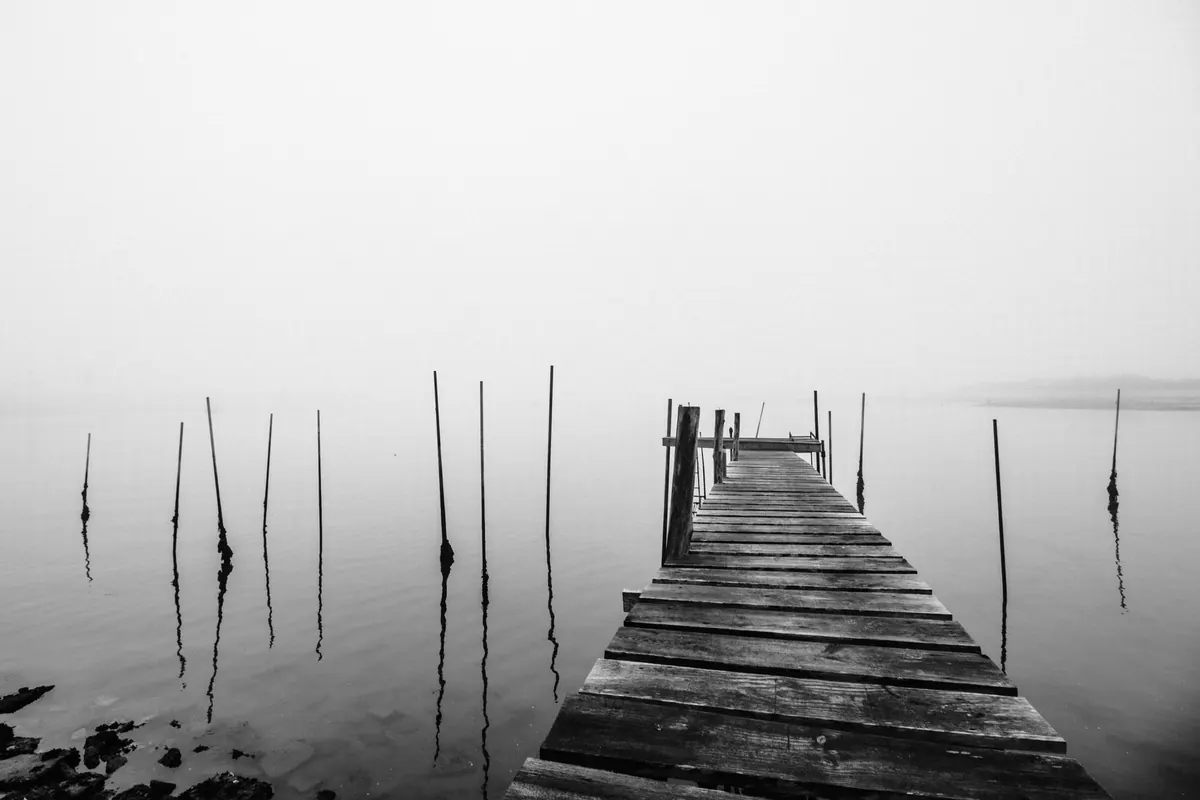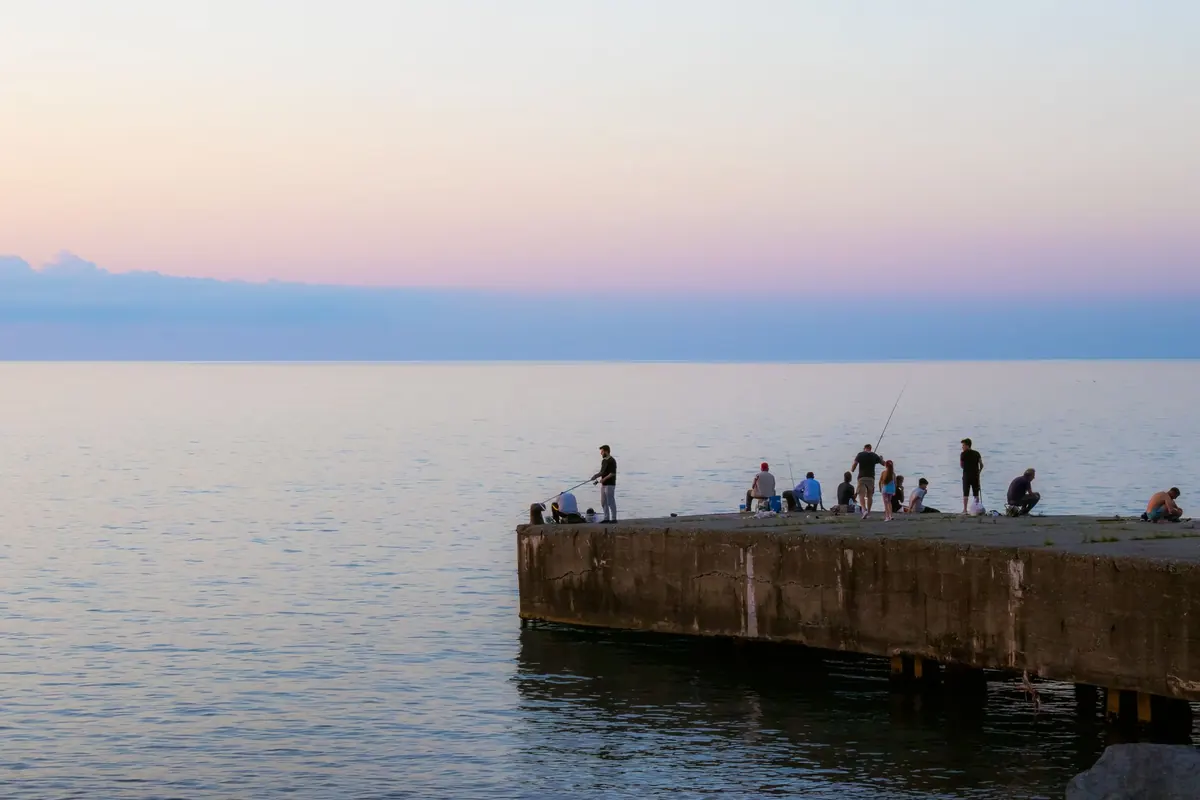
Pier fishing is the easiest way to get a line in saltwater. No boat, no waders, no scrambling over rocks at low tide. You park, you walk out over the water, and you fish. That convenience is exactly why public piers get crowded, and why a little preparation matters more there than on a quiet bank. Wet concrete, sharp hooks, other people's backcasts, and a rail that drops straight into deep water all sit within a few feet of each other. Here is what to sort out before you go, and what to keep in mind once you're standing at the rail.
Before You Leave the House
Pack like you're going to stand in the wind for four hours, because that's usually what happens. A pier trip fails more often from a missing pair of pliers than from bad luck with the fish.
- Rod and reel matched to the pier. A medium spinning setup in the 7- to 9-foot range handles most pier fishing.
- Line and terminal tackle: 15–20 lb mono or braid, hooks, sinkers, swivels, and two or three pre-tied rigs in a small bag so you're not rerigging in the dark while the bite is on.
- Tools: needle-nose pliers or forceps, line cutters, and a hook file. Keep them on your belt or in a pocket, never loose on the deck.
- Footwear: closed-toe shoes with grip. Flip-flops on fish-slimed concrete is how beginners end up in the water.
- A bucket and a rag, plus a small cooler if you plan to keep fish.
- Sun and hydration: hat, sunglasses, sunscreen, and more water than you think you need. There is no shade on most piers.
- A basic first aid kit: bandages, antiseptic wipes, and a small pair of wire cutters you are willing to use on a hook.
- A headlamp if there's any chance you'll still be there at dusk.
- Your license or permit, if the state or pier requires one. Requirements change by location and by species, so check your state fish and wildlife agency's current rules rather than relying on what someone told you last season. If you're unsure whether you need a license or what you may keep, confirm it with the agency or a local tackle shop before you fish.
Read the Pier Before You Rig Up
Walk to the end before you unpack. Most public piers post their rules at the entrance or on a board near the bait shop, and those rules are usually stricter than the state regulations, not looser. Both sets apply.
Look for limits on the number of rods per angler, bans on certain gear, restrictions on fishing near swimmers or near the pier's restaurant deck, closing hours, and rules about keeping certain species. Some piers prohibit shark fishing or heavy tackle entirely. Some charge a daily fee or require you to sign in. Others close sections at night.
While you're walking, note the practical stuff too: where the cleaning station is, where the trash and fish carcass bins are, which side has a current pushing against it, and where the regulars have set up. Don't crowd them. A pier has a rhythm, and it takes about ten minutes to read it.
Weather and Water: Know When to Walk Away
Piers put you over deep water with no quick exit, which makes weather the single biggest safety factor.
Lightning
An open pier is a bad place to be in a thunderstorm, and a graphite rod in your hand makes it worse. If you can hear thunder, pack up and go to your car. Don't wait for rain. Don't finish one more cast.
Wind and swell
Check the marine forecast before you leave, not the general weather app. A stiff onshore wind combined with a big swell can send spray and occasionally water over a low pier deck. If waves are breaking against the pilings and water is washing across the boards, that pier is closed in practice, whether or not there's a sign.
Tide and current
A tide chart tells you when the water is moving. Moving water usually means better fishing, but it also means heavier weights, more tangles, and more drag on a hooked fish. Plan your trip around the tide rather than fighting it.
Casting Safely on a Crowded Deck
Most pier injuries come from hooks, not from falling in. Almost all of them happen during the cast or while landing a fish.
- Look behind you. Every single cast. Rod tips, pedestrians, kids on scooters, and other people's line all live in the space behind your shoulder.
- Skip the big overhead cast. Learn a lob or a gentle sidearm pendulum and keep it low. You lose a few yards and gain a lot of goodwill.
- Announce it. A simple "casting" as you start is standard pier courtesy and gives people time to step back.
- Watch the arc. Birds, railings, light poles, and the pier's own roof are all in the way. Aim through the gap, not over the crowd.
- Keep your rod tip up and your line tight once the bait is out, so you're not sweeping across four other anglers when a fish takes.
- Never cast over someone else's line. If the deck is packed, fish straight down or move to a less crowded section.
Handling Fish, Hooks, and Other People
Wet your hands before touching a fish you plan to release, and keep your fingers clear of the hook point while baiting, especially with trebles. If a fish has swallowed the hook, cut the line close and let it go rather than digging around in its throat. Crushing the barbs on hooks you intend to release makes everything faster and safer.
Don't lift a heavy fish by the line alone. That's how rods break and how sinkers come back at your face. Use a net or the pier's gaff if one is provided, and ask for help instead of improvising. If a hook goes into your skin past the barb, don't yank it out. Cut the line, leave the hook in place, and get medical attention. For anything beyond a surface scrape, a professional should be the one to decide what happens next.
Keep your gear tight to your own spot. Leave the rail gaps alone, don't lean over the edge, and clean up your fish scraps at the station instead of at the rail. Slippery decks cause more falls than anything else on a pier, and most of that slipperiness is fish slime and bait.
A Five-Minute Routine That Covers Most of It
Before your first cast, run through this: check the posted rules, check the sky and the wind, pick a spot with room behind you, set your drag loose enough that a big fish can run, and put your pliers where you can reach them without looking. Then fish.
Pier fishing rewards patience and attention far more than expensive tackle. Learn the deck, respect the people around you, and treat the weather as the final word. Do that consistently and you'll come home with fish, or at least with all your fingers and a dry phone.
Photo: Yeşim Çolak / Pexels