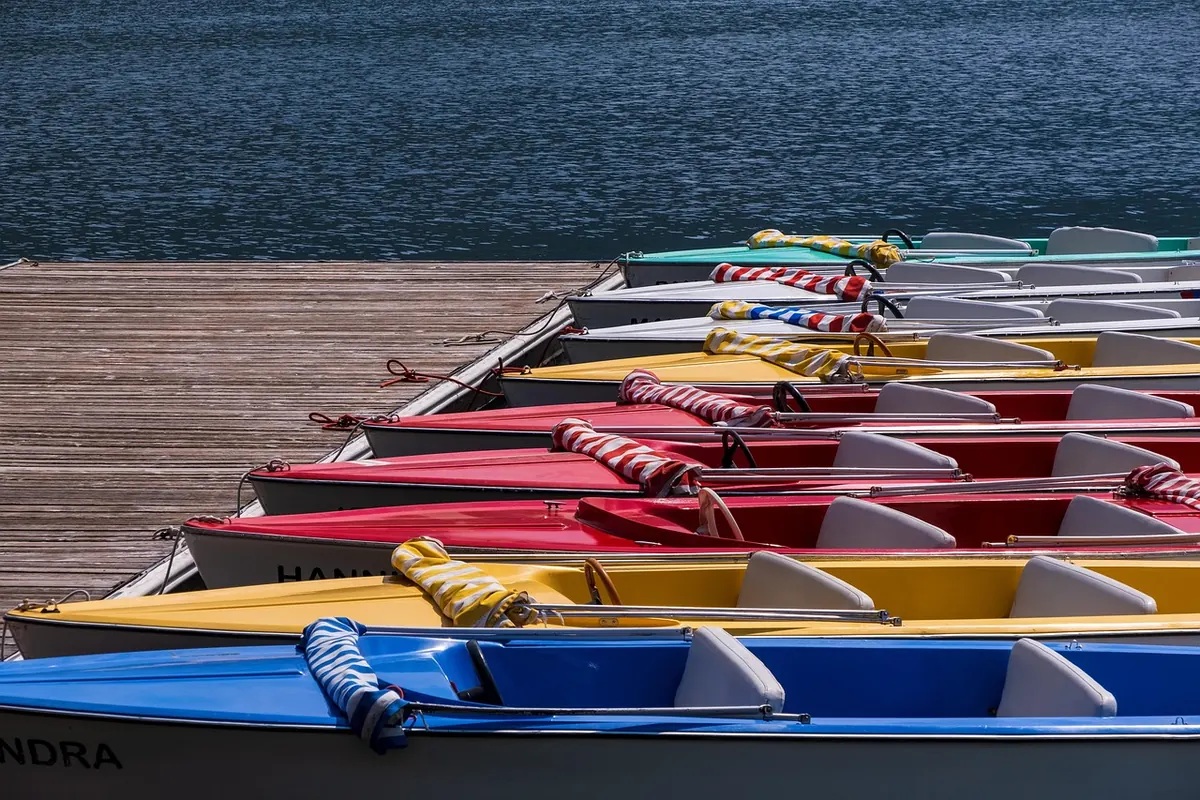
A first night in a marina is a mix of relief and nerves. You have a slip number, a gate code you will almost certainly forget, and a power pedestal that looks nothing like the outlet at home. None of it is difficult, but most of it is easier to learn from a couch than from the helm with the wind pushing you toward somebody else's bow.
Here is what to sort out before you arrive, and what to expect once you are standing on the dock with a bag of shore power cords.
Call Ahead, Even If You Are Sure You Don't Need To
Transient slips disappear on summer weekends and during regattas, festivals, and holiday Mondays. A phone call a few days out saves an hour of circling the basin at dusk. When you call, give honest numbers: length overall, beam, and draft. A marina that can fit a 34-foot boat may not have a finger long enough for a 12-foot beam, and your draft matters more than your pride when the entrance channel is shallow.
While you have someone on the line, ask the questions that are annoying to answer later:
- Is the slip a side tie, a single finger, or a full double finger?
- What is the approach like — depth at the entrance, current, shoaling near the fairway?
- Will anyone be on the dock to catch lines, and what time does the office close?
- What radio channel does the dock monitor, and is there an after-hours phone number?
- Are pets, grills, or generators allowed, and when are quiet hours?
- Where is the pump-out, and is the water on the dock potable?
If you will arrive after the office closes, ask exactly what to do. Some marinas leave assignments taped to a window or posted on a board; others ask you to take a mooring until morning. Do not guess and settle into an empty slip that looks available. It may be rented to someone arriving tomorrow at noon.
What to Have Ready at Check-In
Keep a paper or digital folder with your boat registration or documentation, proof of liability insurance, a photo ID for whoever signs in, and your vessel's real dimensions. Many marinas ask for insurance before they hand over a slip, so confirm that requirement when you book rather than at the counter. Rates, deposits, and cancellation terms vary widely from one marina to the next, and asking up front is normal practice, not rudeness.
Arriving at the Slip
Hang fenders on both sides before you enter the fairway. Wind and current decide which side you will need, and they do not announce themselves in advance. Rig dock lines on the side you expect to land, lead them outside the stanchions so they cannot snag, and keep a stern line within reach. Come in at idle, in gear, bow pointed into whichever is stronger — wind or current. If a neighbor or dockhand offers to take a line, say yes. Everyone has been the new boat once.
Power Hookups: Match the Plug, Check the Breaker
In North America, pedestals usually offer 30-amp 125-volt and 50-amp 125/250-volt twist-lock outlets, sometimes a 15- or 20-amp household socket as well. European marinas more often have 16-amp or 32-amp blue CEE sockets. Bring the cord set that matches your boat, and carry a spare.
- Turn the pedestal breaker off before plugging in anything.
- Inspect both cord ends for corrosion, scorch marks, or a loose fit. A warm plug is a warning, not a nuisance.
- Connect at the boat first, then at the pedestal. Disconnect in the reverse order.
- Switch the pedestal breaker on and check your panel's polarity indicator. Reverse polarity is worth sorting out before you run a charger or air conditioning.
- Coil excess cord loosely. A tight coil under load gets hot.
Use a marine-grade cord set sized for the run. Household extension cords and homemade adapters are how dock fires start. If the breaker trips the moment you plug in, or you smell hot plastic, leave it off and tell the dockmaster. Anything beyond an obviously bad cord is a job for a marine electrician.
Water, Pump-Out, and Waste Disposal
Ask whether the dock water is potable, and keep a white hose reserved for drinking water. A separate hose for washdown avoids the classic mistake of rinsing a muddy anchor with the line you fill your tanks from. Never leave a hose end sitting in the water or dangling in the bilge.
Find the pump-out before you need it. Some marinas include it in the slip fee, some charge, and some rely on a mobile pump-out boat that runs on a schedule. Know which deck fitting leads to your holding tank, because it looks uncomfortably similar to the water tank fill.
Used oil, antifreeze, batteries, and oily rags do not belong in the marina dumpster. Ask the office where hazardous waste goes. Fish carcasses belong at a cleaning station or back in the water, never in a closed dumpster in July.
Security: Gate Codes and Small Habits
Do not prop the gate, even for a minute and even for someone who looks like they belong. Lock the boat when you walk to the showers. Keep outboards, dinghies, and loose gear out of plain view. Photograph your pedestal number, note where the dock extinguishers are, and learn the nearest exit from the pier.
Tell the office if you will be away for a few weeks. Many marinas keep an eye on quiet boats, and it costs nothing to ask. Register guests if the marina requires it, and walk them in rather than passing along the code.
Dock Etiquette That Keeps the Neighbors Friendly
- Idle through the fairway. Wake damages boats and docks, and it undoes goodwill you may need the next time you want a hand.
- Keep lines and cords off the walkway. Coil them or hang them.
- Do not cross another boat to reach the dock if there is a path around. If there is not, ask first.
- Ask before borrowing a dock cart, a hose, or a neighbor's spigot. Most people say yes.
- Respect quiet hours whether or not they are enforced. Generators, music, and late deck conversations all carry over water.
- Clean fish at the station, never on the dock or in the shower.
- Pick up after your dog and do not leave it tied on the dock while you go out.
- If you see someone struggling with lines, offer to help.
A Five-Minute Arrival Routine
- Call the dock by radio or phone when you are three or four minutes out.
- Fenders both sides, lines led and cleated.
- Approach at idle with the bow into wind or current.
- Hand up a bow line, then a spring, then the stern.
- Shut down, secure the boat, then walk to the office and the facilities.
- Connect power and water last, once you are certain which pedestal is yours.
Work through those in order and a first marina visit becomes mostly paperwork and a short
Photo: NickyPe / Pixabay